

For foreign video game studios considering the Chinese market, protecting the software, artwork and other original content behind their games should form part of early planning. Understanding the scope of copyright protection, the role of registration and the available enforcement options can help studios protect their investment as their games reach Chinese players.
Copyright Protection and Registration
Foreign games can receive copyright protection in mainland China under China’s Copyright Law and applicable international treaties, including the Berne Convention. For qualifying works, protection arises automatically and does not depend on registration in China or a prior release in mainland China.
Studios should nevertheless consider registering the game software and key creative assets in China. Registration can strengthen the evidence supporting their rights and assist with licensing, platform complaints and other enforcement actions.
For imported online games licensed by overseas rights holders, the publication approval process for obtaining a Chinese ISBN also requires registration of the relevant copyright licensing contract with the National Copyright Administration. This is a separate procedure from registering copyright in the game software or its creative assets and should be addressed early in publication planning.
What Parts of a Game Can Be Protected
A game may contain several elements that qualify for protection under China’s Copyright Law. Program code may be protected as computer software, character artwork as works of fine art, narrative text as written works, and music as musical works. Cutscenes and other audiovisual sequences may also qualify as audiovisual works. To qualify for copyright protection, each element must meet the relevant legal requirements, including originality.
Copyright generally protects original expression rather than abstract ideas, gameplay rules or operating methods. Similarities in a combat mechanic or overall visual style do not, by themselves, establish infringement. The specific code, artwork and animations used to implement or present that mechanic may nevertheless be protected. This distinction helps studios assess both the protection available for their own games and the risks of drawing on existing titles.
Responding to Copyright Infringement
For studios with well-known games, Chinese online marketplaces are an important place to monitor for unauthorized downloads and misleading activation offers. One practice is “fake Steam library activation”, which uses unofficial tools to make games appear activated without a corresponding legitimate license. Such services may be marketed as “genuine” game purchases.
Screenshots from a preliminary review dated May 10, 2026 show low-priced listings relating to Clair Obscur: Expedition 33 on Xianyu and Taobao/Tmall, including offers advertised as full-game downloads or “genuine” Steam activation. Offers priced far below the game’s usual retail price may involve “fake Steam library activation” or other unauthorized methods of providing access.
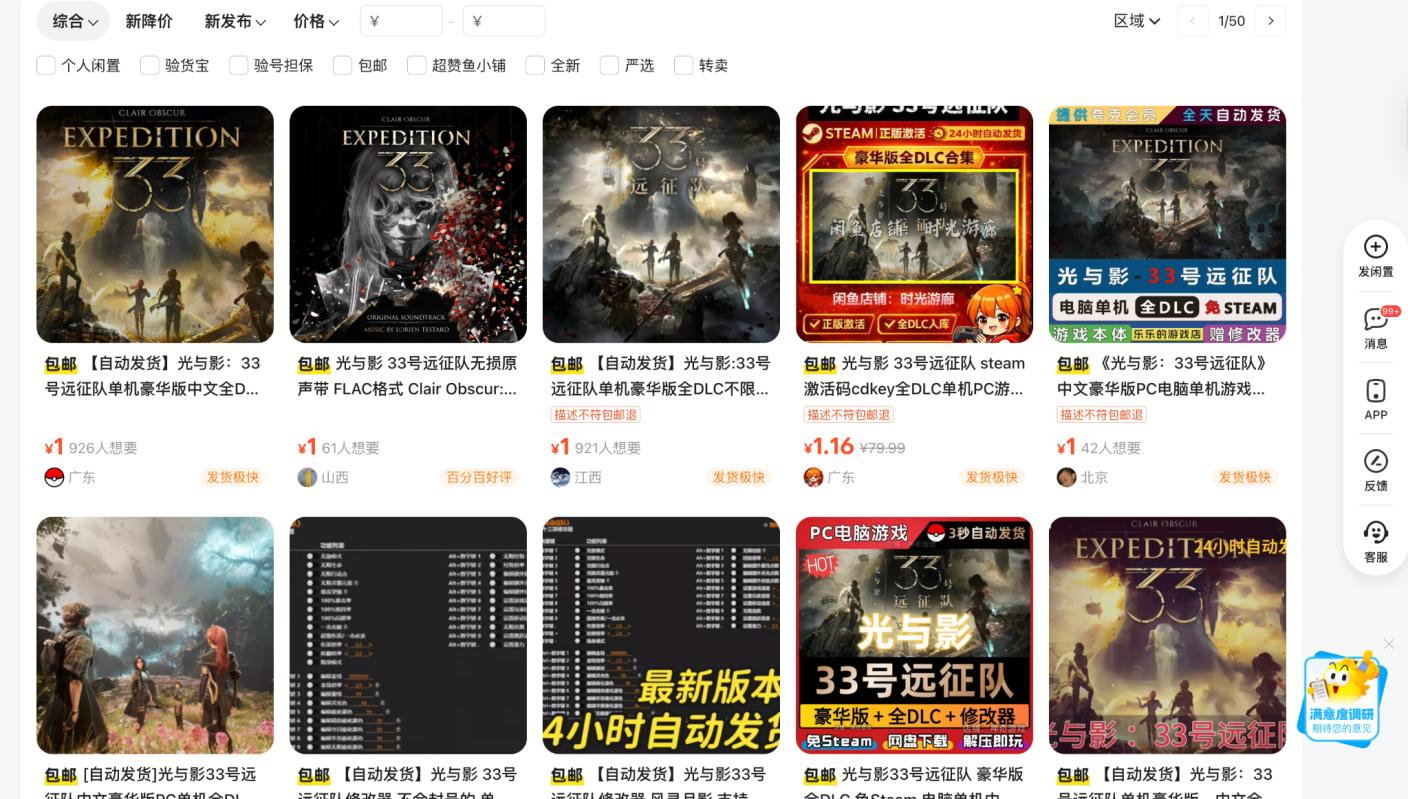
Figure 1. Xianyu listings include game-related offers priced at RMB 1.00–1.16 (approx. USD 0.15–0.17). The displayed “want” counts, including 926 and 921, indicate interest rather than completed purchases.

Figure 2. Taobao search results include game-access offers and related products priced at RMB 0.50 (approx. USD 0.07), RMB 1.98 (approx. USD 0.30) and RMB 2.80 (approx. USD 0.42).
Copyright risks also extend to physical merchandise. Figurines, clothing, posters and other products may infringe copyright if they reproduce protected game character designs or artwork without permission.
When studios identify suspected copyright infringement involving their games in China, they should seek assistance from Chinese legal counsel to collect and preserve evidence and assess the appropriate response. Depending on the nature, scale and seriousness of the conduct, options may include requesting the removal of infringing listings through platform complaints or bringing civil proceedings to stop infringement and seek damages. Serious infringement may also constitute a criminal offense where the statutory requirements are met.
Online sales of pirated games can undermine a studio’s commercial interests, damage the game’s reputation and harm players’ legitimate interests. Prompt action can help limit these effects and maintain players’ trust in the game.
Copyright protection should remain part of a studio’s planning as its business in China develops.
Identifying key assets, keeping clear evidence of ownership and monitoring how those assets are used can help studios act promptly when problems arise and support the long-term value of their games.